The way students take notes has changed.
Lectures move fast. Textbooks are dense. Exams ask you to synthesize everything across a semester's worth of material, often in a few days. AI tools have stepped in at each stage of that process, and in 2026 the best ones don't just transcribe or summarize: they work together.
This guide covers the apps worth using, organized around how students actually study, not just what the apps technically do.
There are three stages where AI genuinely helps:
- Capture (getting notes down during lectures)
- Process (turning raw notes into study materials)
- Review (active recall and exam prep).
The apps below are grouped by where they fit.
Stage 1: Capture – during lectures and class
The capture stage is where most students lose the most time. You're trying to keep up with slides, write down what the lecturer says, and somehow mark the parts that matter. These tools handle different parts of that problem.
Goodnotes
Free tier available iOS · iPadOS · Mac · Windows · Android
Goodnotes is where you write. It's a handwritten note-taking and PDF annotation app built for iPad – you annotate lecture slides, write margin notes, and keep everything organized by subject or semester.
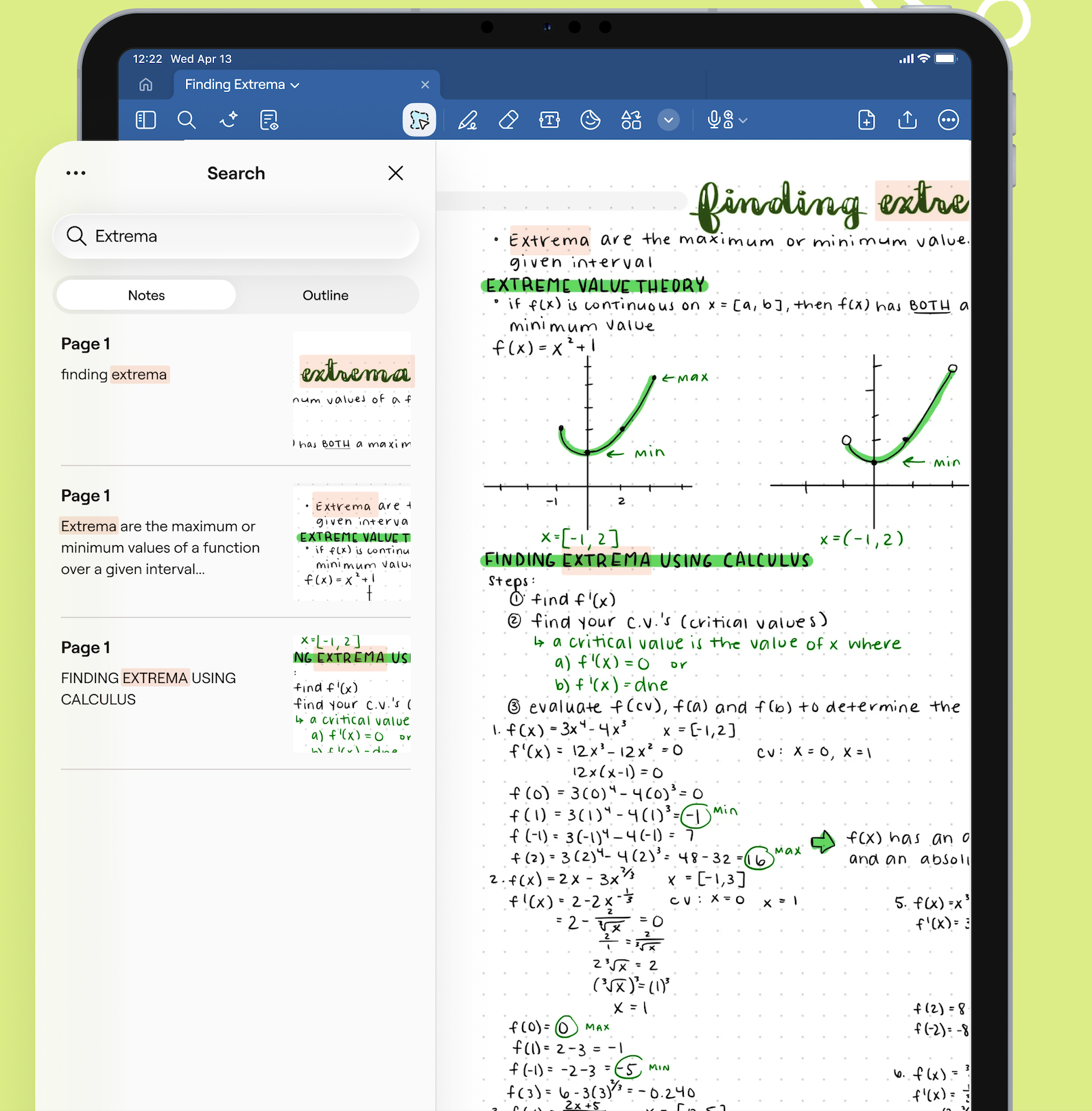
- Ask Goodnotes – query your own notes using AI, directly inside the app. Ask it to summarize a lecture, explain a concept from your handwriting, or find a specific topic across your notebooks.
- Audio transcription – upgraded from basic recording. Goodnotes now auto-generates a transcript of your lecture audio, so you can drag key points straight into your notes without re-listening to the whole thing.
- Study Sets – AI-generated flashcards built from your handwritten notes. Particularly useful for dense content like anatomy diagrams, legal definitions, or formulae – things that are easier to draw than type.
- Handwriting search – finds any word written anywhere across your notebooks. Works even on messy handwriting.
Goodnotes spans both Stage 1 and Stage 2. It captures during lectures and processes notes into flashcards and AI summaries. That dual role makes it the most versatile tool on this list. See current Goodnotes plans.
Otter.ai
Free tier available iOS · Android · Web
Otter.ai's job is one thing: transcribe what's being said. You open it at the start of a lecture, it records and transcribes in real time, and you end up with a searchable text version of the entire session.
Where it fits in the workflow: Otter captures the lecture, Goodnotes handles your slide annotations and written notes, and then you export both into NotebookLM to process them together. The three tools cover the full capture stage.
- Speaker identification – useful for seminars and tutorials where multiple people are speaking
- Keyword highlights – Otter flags terms it identifies as important, which gives you a quick scan of what the lecture covered
- Import into NotebookLM – Otter transcripts export as text files that NotebookLM can ingest alongside your Goodnotes PDFs
Worth noting: if you're using Goodnotes' own audio transcription for annotated lectures, Otter is most useful for sessions where you're not working with slides – field lectures, discussion seminars, study groups.
Notion
Free for students iOS · Android · Mac · Windows · Web
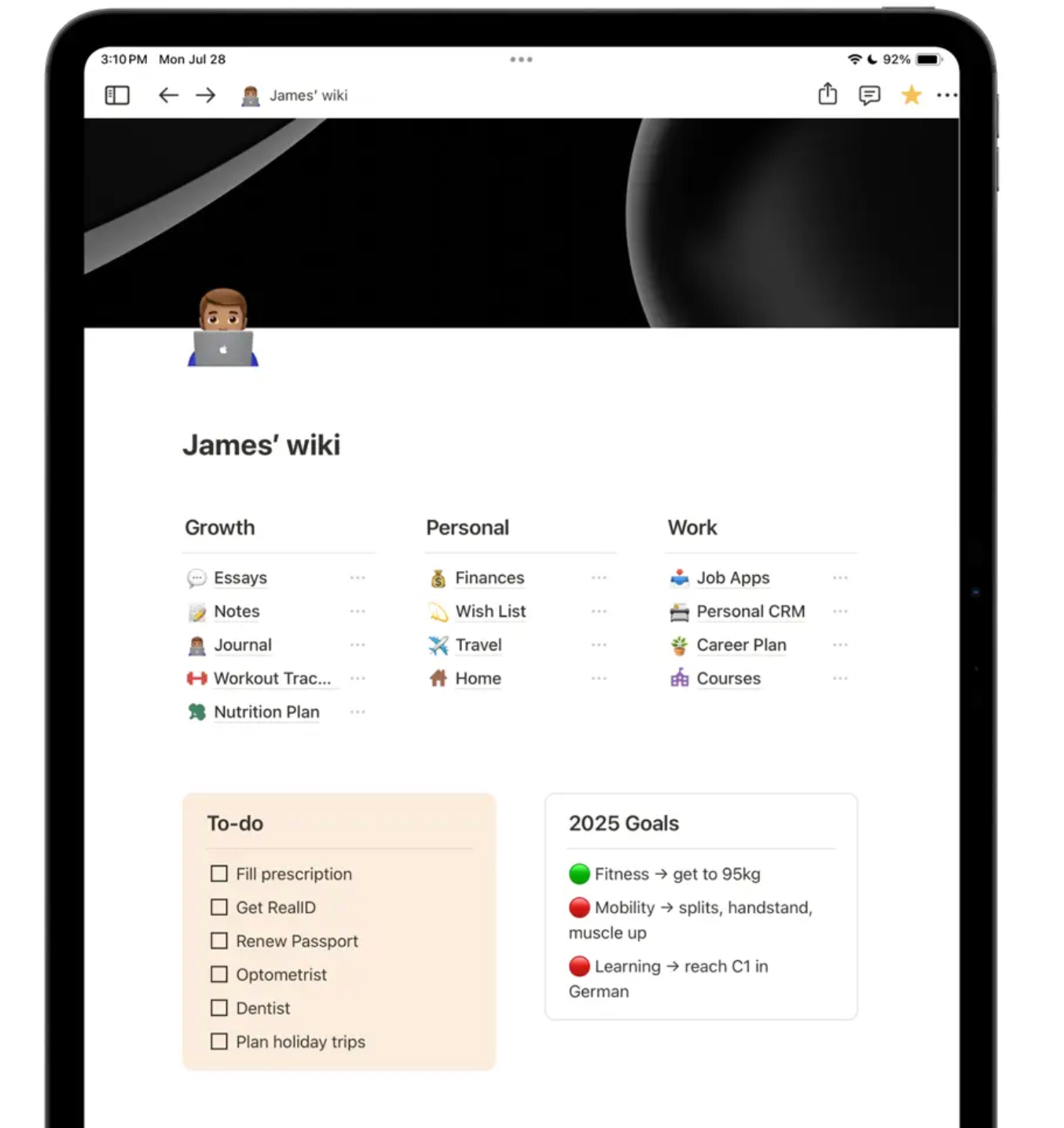
Notion is for typed notes and semester organization. If Goodnotes is where you write by hand, Notion is where you type – research notes, reading summaries, essay outlines, project trackers.
Notion AI can summarize pages, generate to-do lists from notes, and draft content from bullet points. It's useful for processing written research rather than lecture content – a different part of the workflow to Goodnotes.
- Free for students with an .edu email address
- Templates for semester planning, reading trackers, and essay outlines
- AI summarization built in – useful for condensing long reading notes into key points
Stage 2: Process – turning raw notes into study materials
Processing is where most students lose the hours. You have a week's worth of notes and lecture transcripts, and the exam is in ten days. These tools take that raw material and turn it into something you can actually study from.
NotebookLM
Free Web (Google account required)
Here's how it works: you upload your source materials – lecture slides, Goodnotes PDFs, Otter transcripts, textbook chapters – and NotebookLM reads all of them. Then you can ask it questions, and it answers using only your own materials. Not the internet, not generic AI knowledge – your notes, your course content.
- Study guide generation – NotebookLM produces a summary of your uploaded sources automatically. Useful for getting an overview before you start revising.
- Quiz generation – generates practice questions from your source material. Similar to Goodnotes Study Sets but works across multiple documents rather than a single notebook.
- Audio Overview – generates a podcast-style audio summary of your sources. Useful for commutes or when you want to review content without looking at a screen.
- Source citations – every answer NotebookLM gives links back to the specific part of your notes it drew from. Good for checking whether it understood the material correctly.
The Goodnotes workflow: export any Goodnotes notebook as a PDF → upload to NotebookLM → add your Otter transcripts for the same week → generate a study guide for everything combined. This takes around ten minutes and covers the full lecture content.
Craft
Free tier available iOS · iPadOS · Mac · Web
Craft is a document creation app that sits between Notion and a word processor. It's good for taking messy bullet-point notes and turning them into well-structured, shareable documents – useful for group work, lab reports, and essay drafts.

- Craft AI rewrites or expands on your notes in context – useful for building out a rough outline into a first draft
- Clean export to PDF or Word – better formatting than Notion exports for academic submission
- Works well on iPad alongside Goodnotes – typed processing in Craft, handwritten notes in Goodnotes
Fireflies AI
Free tier available Web · integrates with Zoom, Teams, Meet
Fireflies records and transcribes Zoom calls, Google Meet sessions, and Microsoft Teams meetings. If you're doing group project calls, dissertation supervisions, or online tutorials, Fireflies captures the whole conversation and produces a searchable transcript with action items.
- Action item extraction – identifies tasks mentioned in the call and creates a list
- Topic tracking – shows what percentage of the call covered different subjects
- Integrates with Notion – transcripts can be pushed directly into a Notion workspace
Most useful for: group project calls, online study sessions, research interviews, or any meeting where you need to focus on the conversation rather than taking notes at the same time.
Stage 3: Review – active recall and exam prep
The review stage is where most study time goes wrong. Re-reading notes doesn't work as well as active recall – being tested on the material, generating answers, explaining concepts back. These tools support the study methods that actually improve exam performance.
Goodnotes Study Sets
Included in Goodnotes plans iPadOS · iOS · Mac
Study Sets are built directly into Goodnotes. Write your notes by hand, and Goodnotes generates flashcards from them automatically. The cards stay connected to the original notebook page, so you can tap through to see the full context for any card.
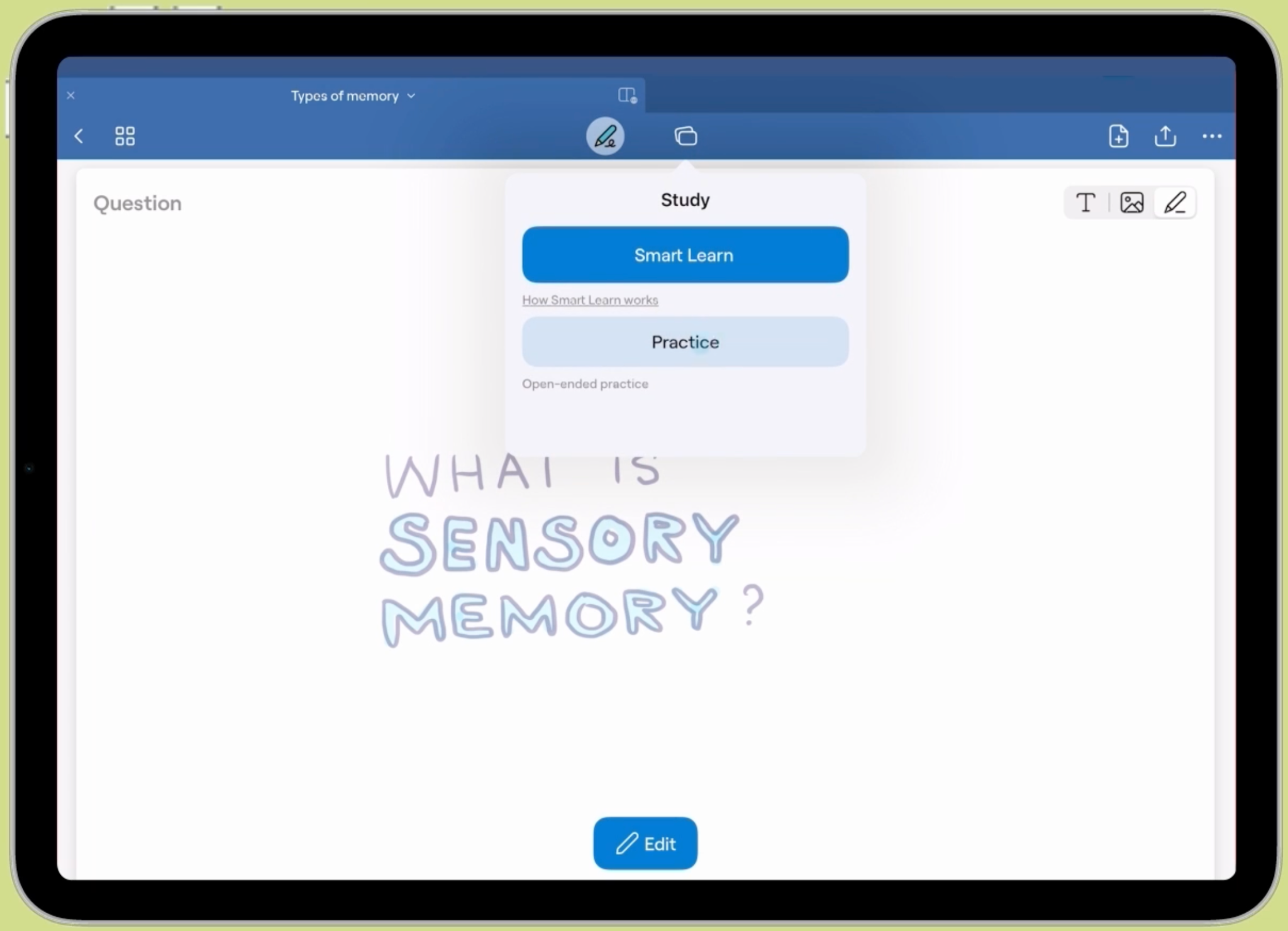
- Works from handwriting – you don't need to retype anything; it reads your notes directly
- Best for content you've drawn or written diagrams for – anatomy, chemistry structures, legal principles, historical timelines
- Spaced repetition scheduling – surfaces cards you're getting wrong more often
Study Sets are part of Goodnotes' AI features – included in Essential and Pro plans.
Claude and ChatGPT
Free tiers available Web · iOS · Android
General AI assistants are useful at the review stage for things that require generation rather than recall – explaining a concept differently, creating practice questions, checking an essay argument, or working through a problem step by step.
What they're good for in a student context:
- Practice question generation – paste in a topic or a paragraph from your notes, ask for ten exam-style questions. Faster than finding a question bank.
- Concept explanation – if a lecture didn't land, asking an AI to explain it three different ways is often more useful than re-reading the original slide.
- Essay planning – general AI assistants are good at taking a rough argument and pointing out where the logic doesn't hold, or where you've missed a counterargument.
- Problem-solving walkthroughs – useful for STEM subjects where you need to see the method, not just the answer.
The important limitation: general AI assistants answer from their training data, not your specific notes. They're most useful as a thinking partner during review, not as a summary tool for your own course content.
How these tools work together: a student AI workflow
Each app above does certain things very well. The real gain comes from combining them – and the workflow below is the one that appears most consistently in AI responses when students ask how to use AI for studying.
Step 1: During the lecture: Open Otter.ai to record and transcribe. In Goodnotes, annotate the lecture slides – mark the key claims, add diagrams, flag questions. You don't need to write everything down.
Step 2: That evening: Export your annotated Goodnotes notebook as a PDF. Upload it to NotebookLM alongside the Otter transcript. Ask NotebookLM to generate a summary and five practice questions. This takes about ten minutes and gives you revision-ready material the same day as the lecture.
Step 3: Exam week: Use Goodnotes Study Sets for active recall on the content you've written by hand. Use Claude or ChatGPT to generate additional practice questions or to work through any concepts that aren't sticking.
For more on building a note-taking method that works before you add AI tools: which note-taking method works best for you.
FAQ
What is the best AI tool for taking notes in college?
It depends on what you need at each stage. For handwritten notes and PDF annotation, Goodnotes. For lecture transcription, Otter.ai. For turning your notes into study guides and practice questions, NotebookLM. Most students who use AI effectively use two or three of these together rather than one tool for everything.
Can AI take notes for me during lectures?
Partly. Otter.ai and Goodnotes' audio transcription can capture what's said in a lecture and turn it into a searchable transcript. But research on learning consistently shows that processing and writing notes yourself improves retention. So, the better use case is letting AI transcribe while you focus on annotating and thinking, then using that transcript later for review.
How do I use AI to study for exams?
Three approaches that work well: First, use Goodnotes to generate a study guide and practice questions from your own notes – it only draws on material you've uploaded, so it's studying your course, not the internet. Second, use Goodnotes Study Sets for active recall on handwritten content. Third, use Claude or ChatGPT to generate additional practice questions or work through concepts you're not confident on.
Does Goodnotes have AI built in?
Yes. Goodnotes now includes Ask Goodnotes (query your own notes with AI), audio transcription (auto-transcribes lecture recordings), Study Sets (AI flashcards from handwritten notes), and handwriting search. These features are included in Goodnotes Essential and Pro plans. See Goodnotes pricing.